



Project: LOGOS Lot 106
Builder:Vaughan Constructions (QLD) Pty Ltd
Address:Hashim Place, Karawatha QLD
Overview
Temperature Controlled Industrial Facility with 3,000+ m2 of Freezer space and 5,000 m2 of Internal Storage, Multi Storey Office and 13,000+ m2 of External Hardstand. This development was completed for LOGOS and Martin Brower.
Key Highlights
A concise description of the scope of work, and any specific requirements – please use dot points
- Full survey and setout of all in-situ concrete elements
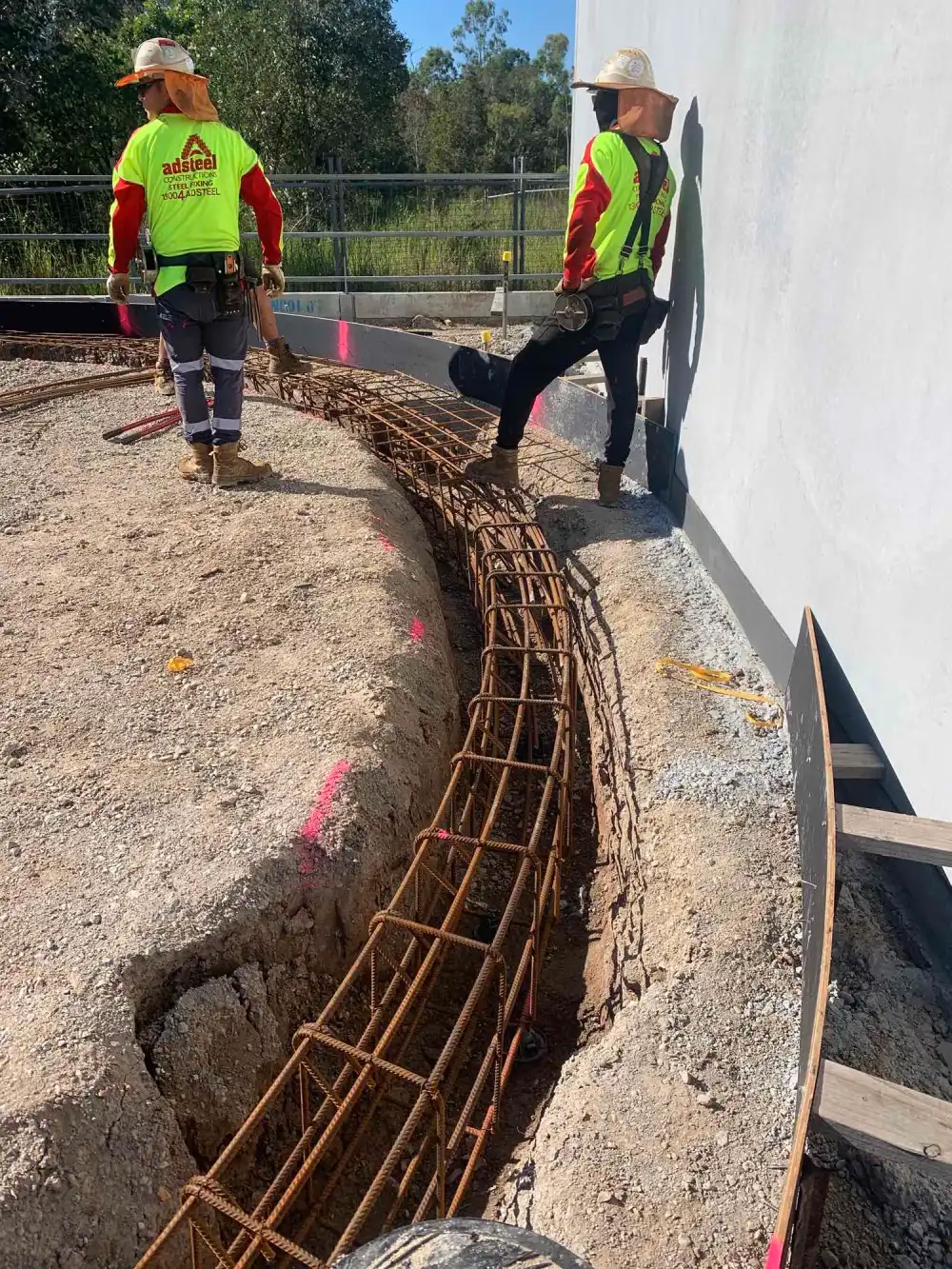
- Detailed excavation and placement of concrete foundations
- Setout and installation of hold down bolts for structural steel columns
- Formwork setup and installation for slabs, drains, pits and loading docks
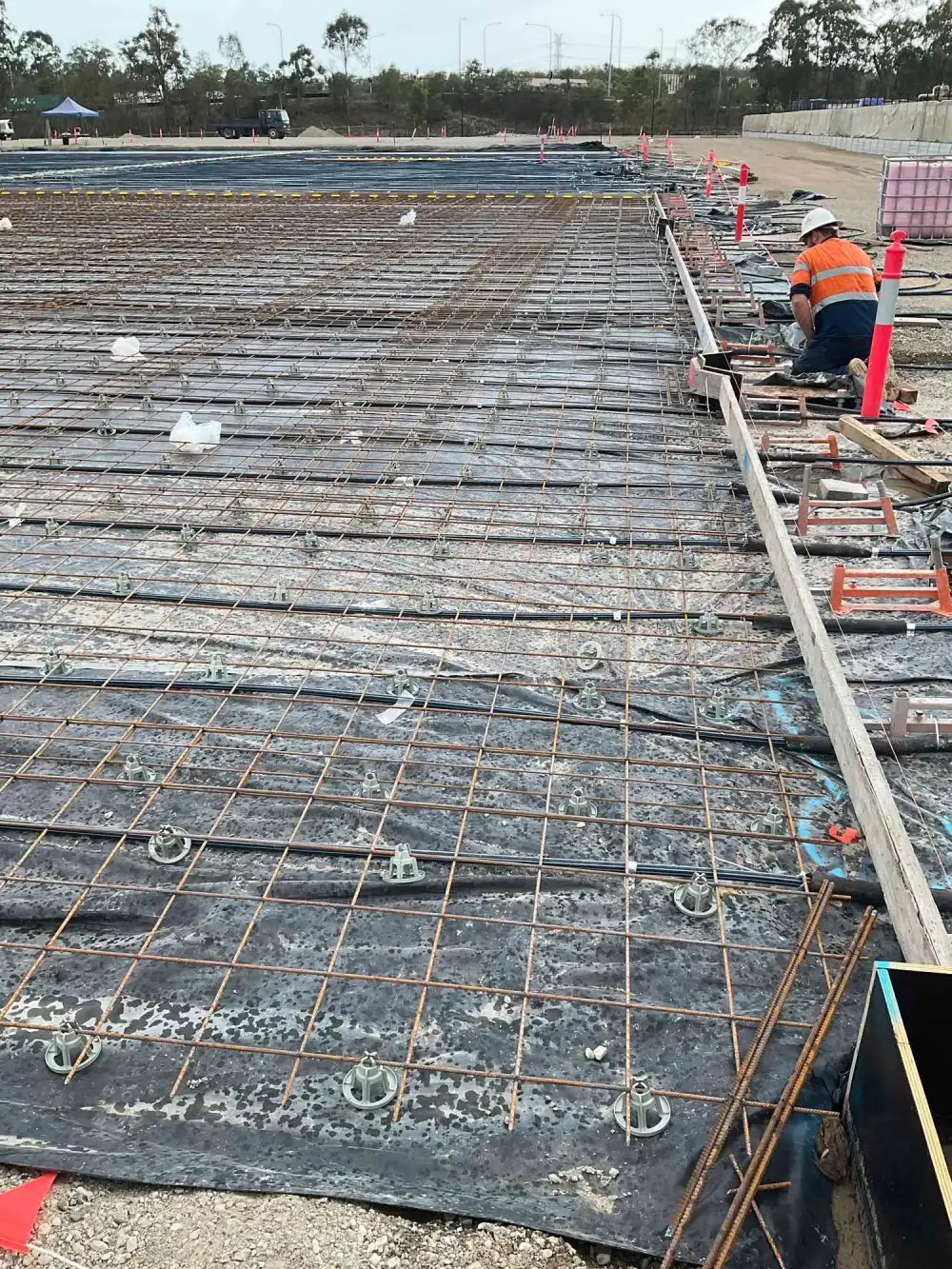
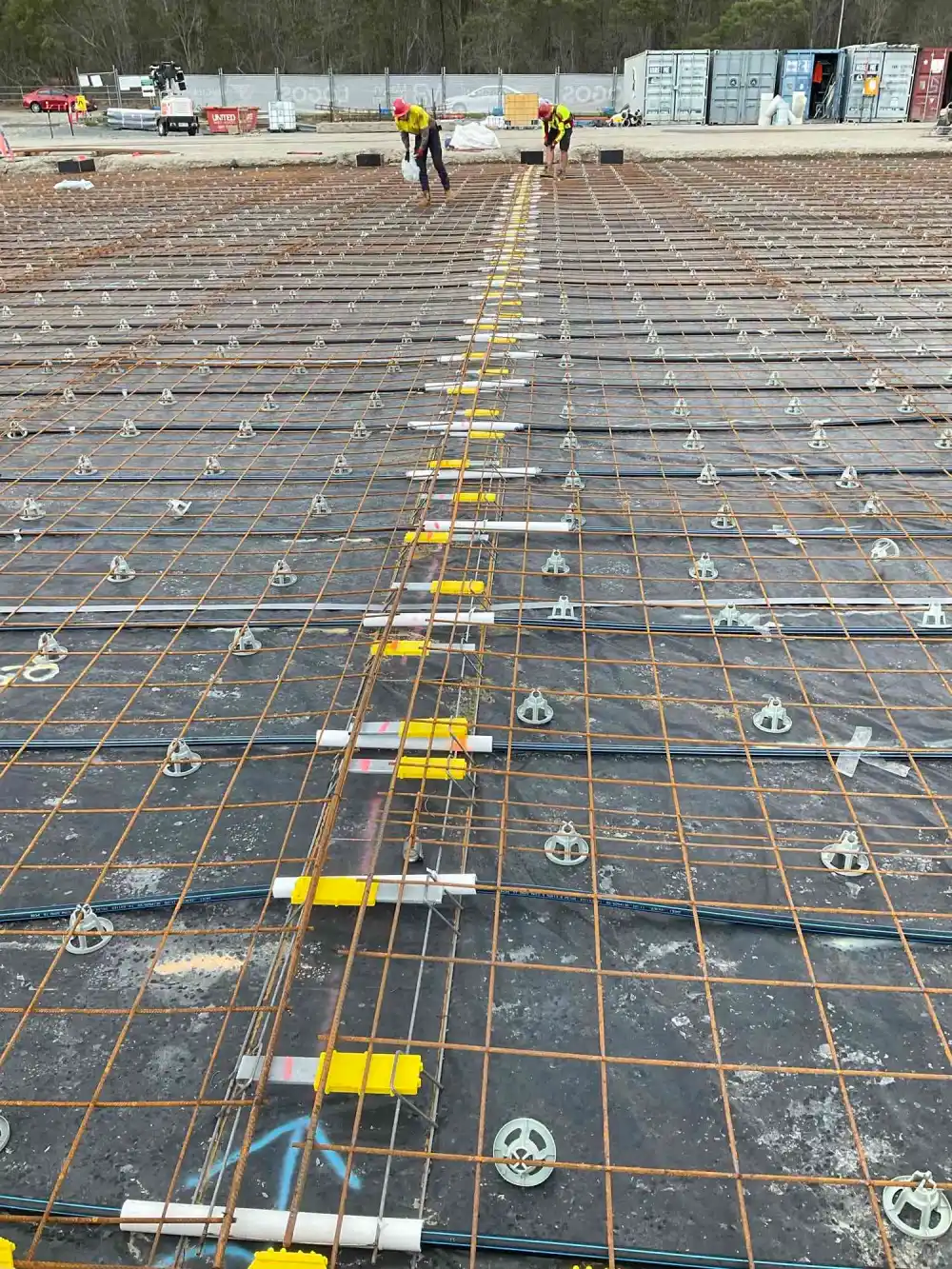
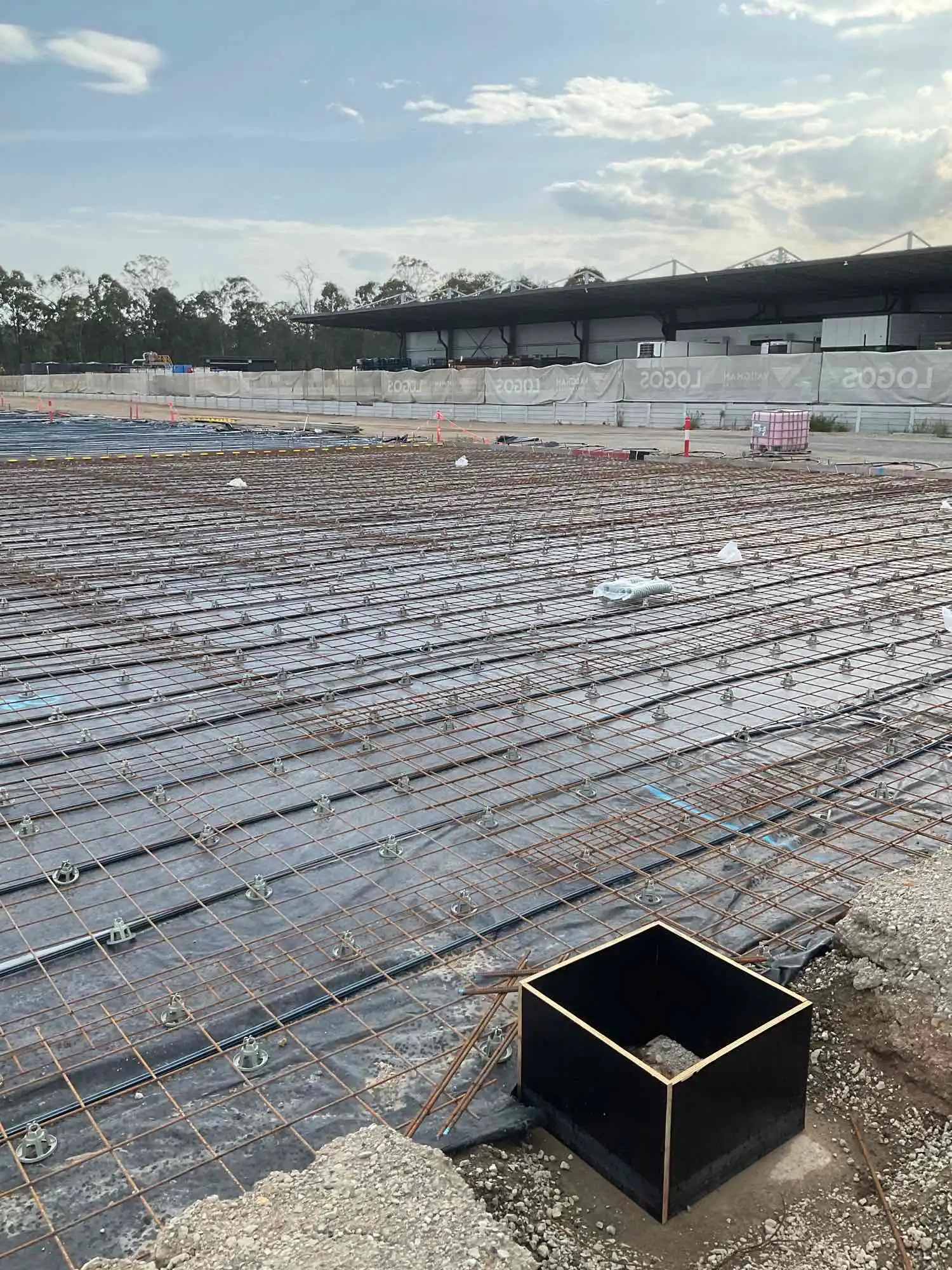
- Supply and installation of over 18,000 m2 of reinforcing mesh
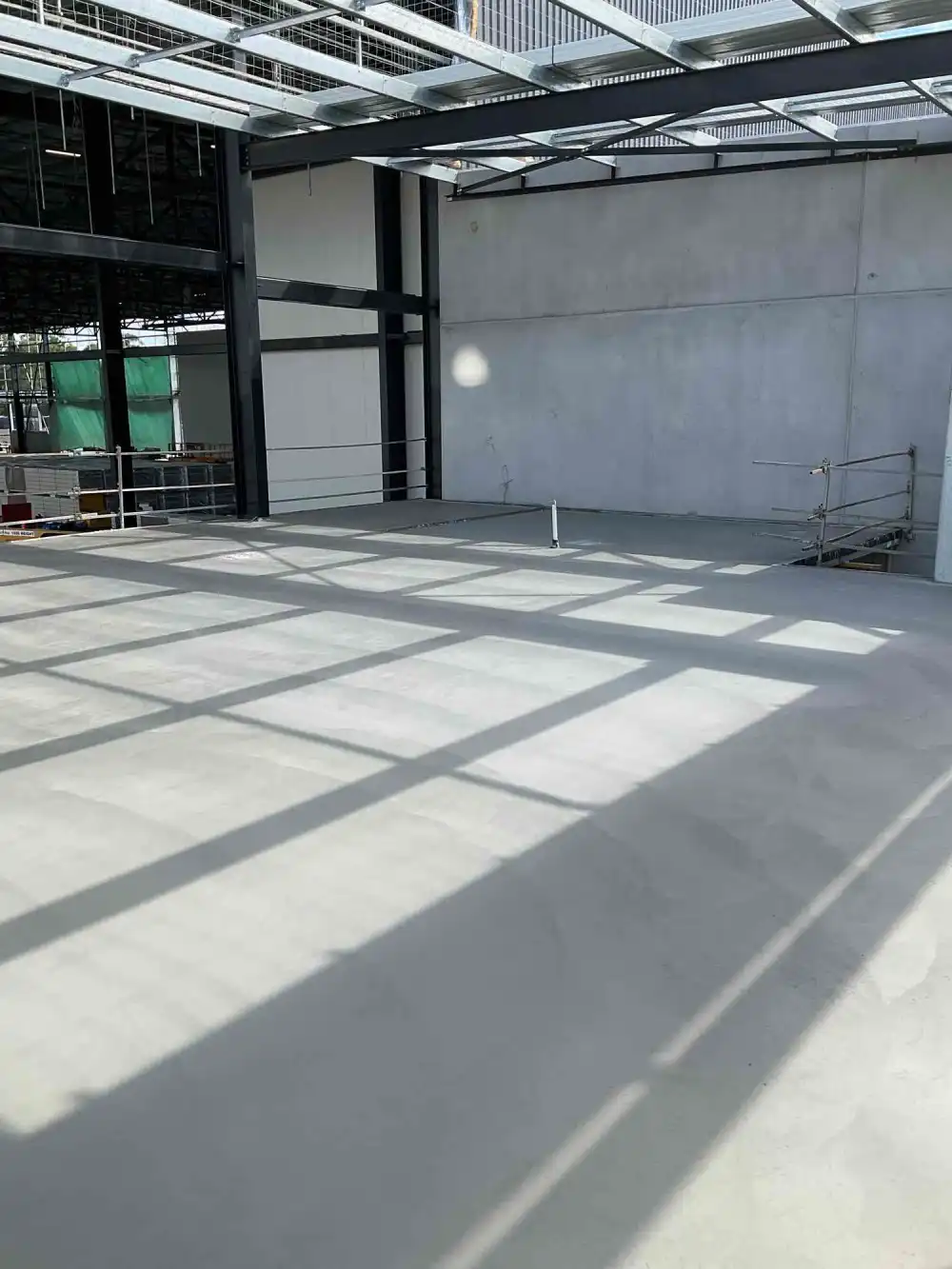
- Place and finish over 3,000 m2 of high quality burnished concrete slabs for Freezers
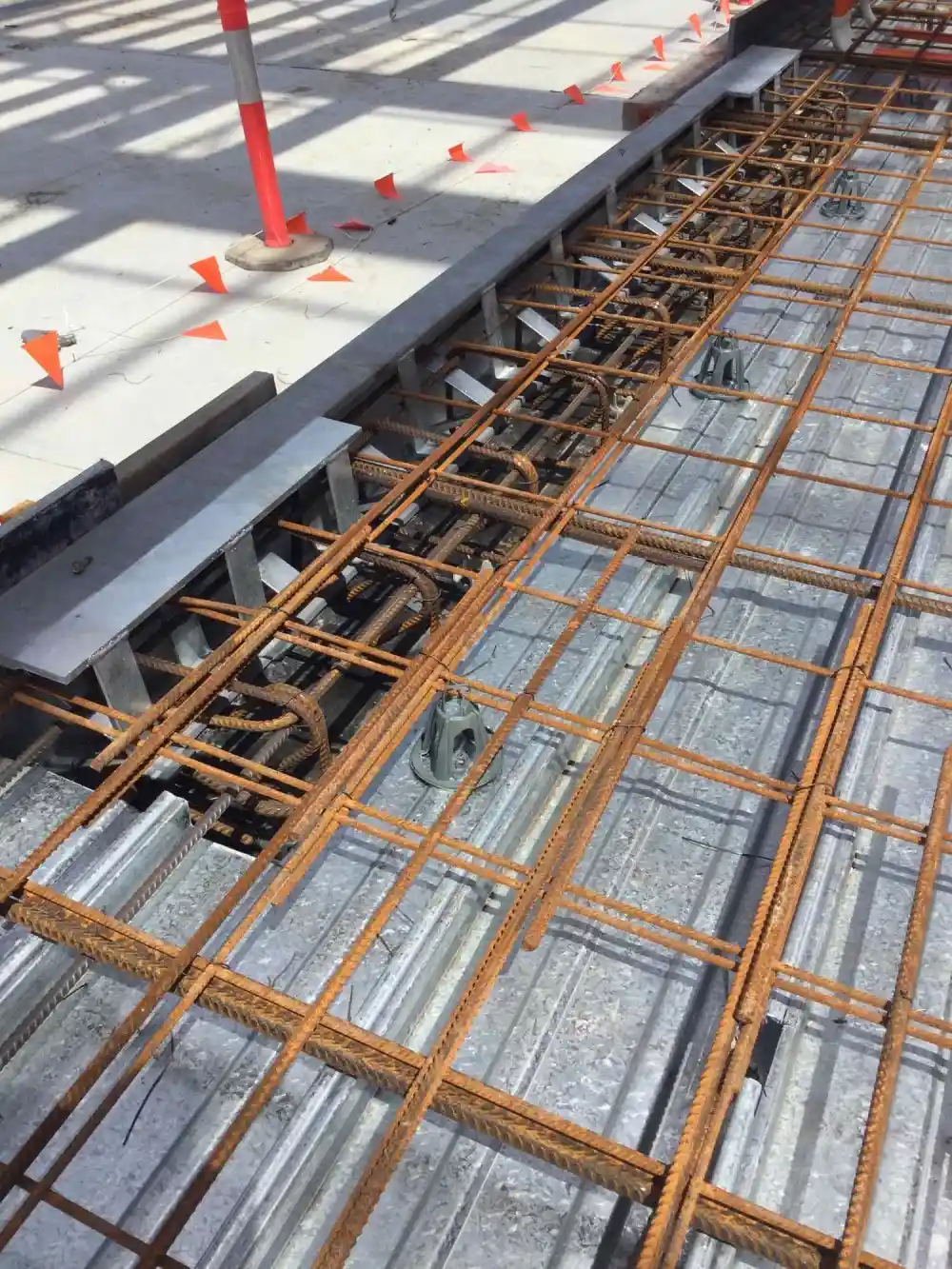
- Install over 600m of freezer panel protection kerbing
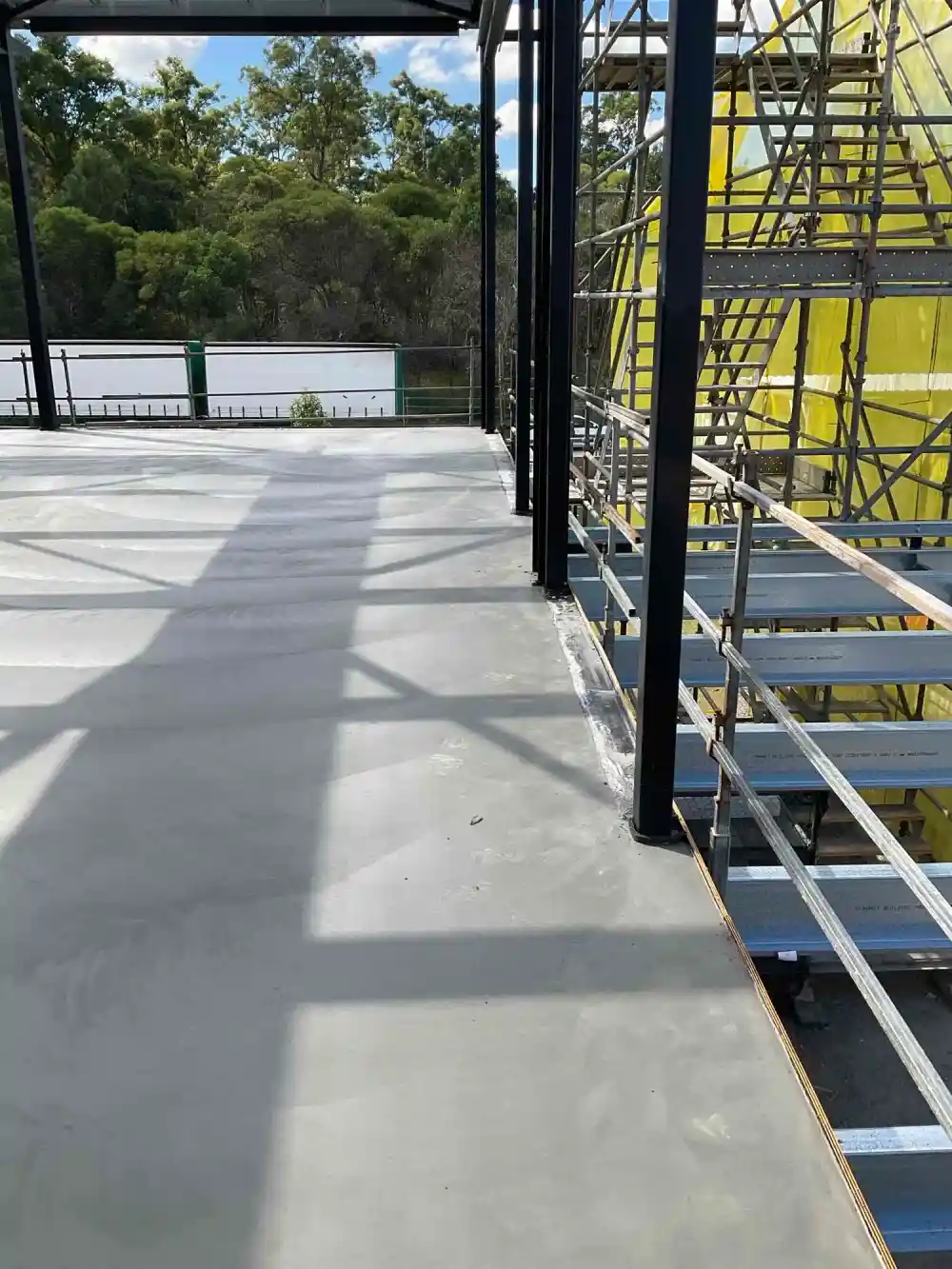
- Place and finish over 13,000 m2 of External Hardstand
- Installation of all bollards for impact protection
- Extrude all kerbing to concrete pavements
- All concrete pumping
Challenges and Solutions
Highlight any specific challenges faced during this project, such as tight deadlines, environmental factors, or technical obstacles, and describe how Kraftur overcame them.
The main challenge for this project was the freezer slabs as the pours had to be completed in an almost enclosed space with limited access. Freezer panel walls were left out for a small corner of the 3,000m2 freezer to provide access for concrete trucks and telebelt. Carbon monoxide from trucks and telebelt, as well as concrete finishing gear made the enclosed space dangerous to work in. Multiple extractor fans were set up inside this space to improve air circulation, both by removing excess fumes and blowing clean air inside the freezer during concrete pours. This work method plan and set up was reviewed by an occupational hygienist to ensure all practices comply with standards. A gas monitor was also used during pours to provide warning if the emissions reached dangerous levels.